Crowdfunding has become a go-to option for tech startups as traditional venture funding becomes harder to secure. In 2023, global VC funding dropped 38% to $285 billion, while crowdfunding surged, generating $447.4 million in the first half of 2025 alone. For tech founders, platforms like StartEngine, Wefunder, Kickstarter, Indiegogo, Republic, SeedInvest, and Crowdfunder offer tailored solutions – whether you’re looking to sell equity or pre-sell products.
Key highlights:
- Equity Crowdfunding: Platforms like StartEngine, Wefunder, and Republic allow startups to sell shares, raising up to $5 million annually under Regulation Crowdfunding (Reg CF).
- Reward-Based Crowdfunding: Kickstarter and Indiegogo are ideal for hardware projects, offering pre-sales and perks to backers.
- Costs: Equity platforms charge fees ranging from 6–12% of funds raised, plus additional equity or legal costs. Reward platforms like Kickstarter charge a flat 5% fee plus payment processing.
- Investor Reach: Platforms like Wefunder and Republic boast millions of investors, while Crowdfunder focuses on accredited investors for strategic funding.
Quick Tip: For software or deep tech startups, equity crowdfunding works best. Hardware startups often thrive on reward-based platforms. Choose your platform based on your product type, funding needs, and readiness for compliance.
Quick Comparison:
| Platform | Funding Type | Fees (Cash) | Notable Features |
|---|---|---|---|
| StartEngine | Equity (Reg CF/A+/D) | 7–12% | Secondary marketplace for share trading |
| Wefunder | Equity (Reg CF/D) | 7.5% | Community-focused with SPV structure |
| Kickstarter | Rewards-based | 5% | All-or-nothing funding model |
| Indiegogo | Rewards-based | 5% | Flexible funding and global reach |
| Republic | Equity (Reg CF/A+/D) | 6% | Focus on tech, AI, and blockchain |
| SeedInvest | Equity (Reg CF/A+/D) | 7.5% | Rigorous vetting, part of StartEngine |
| Crowdfunder | Equity (Accredited) | Varies | Live pitch events for accredited investors |
Crowdfunding isn’t just about securing funds – it’s an opportunity to validate ideas, build a community, and establish early traction. Many founders share their journey through these stages on startup tech leader episodes. Choose the right platform carefully to align with your goals and maximize your campaign’s success.
Best Equity Crowdfunding Websites and Platforms in 2026
sbb-itb-772afe6
Top Crowdfunding Platforms for Tech Startups
When it comes to crowdfunding, the right platform can make or break your campaign. Each platform has its own focus – whether it’s equity or rewards – and varying levels of selectivity. Here’s a closer look at some of the top options for tech startups.
StartEngine
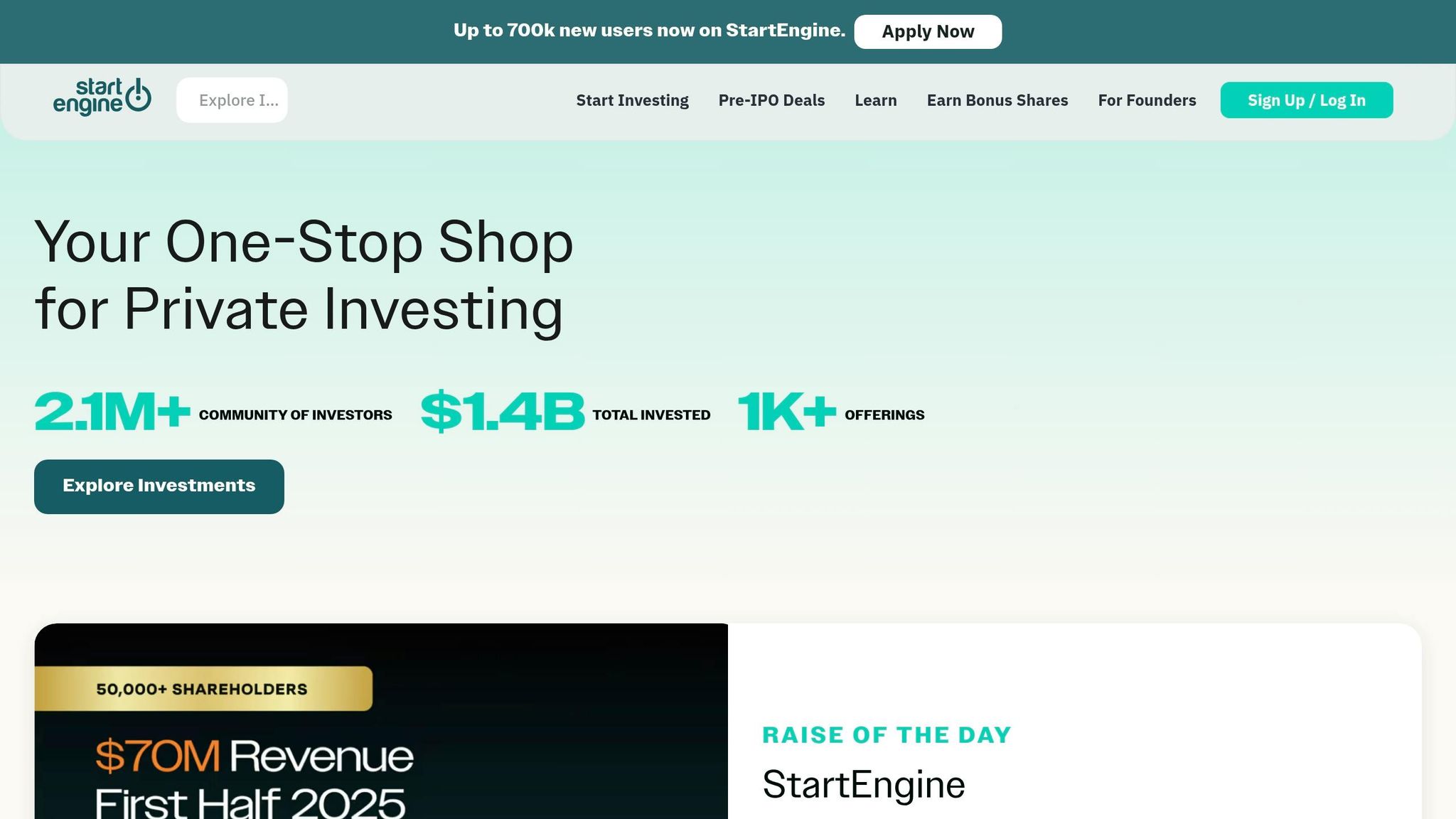
StartEngine is one of the busiest equity crowdfunding platforms in the U.S., offering Regulation CF, Reg A+, and Reg D campaigns. This flexibility makes it suitable for startups at various stages, from early fundraising efforts to larger-scale campaigns. The fees include 7–12% of the funds raised, a 2% equity fee, and a $10,000 deferred revenue fee.
One standout feature is StartEngine Secondary, a marketplace where investors can trade shares before a company goes public. This is a rare option in an industry where equity is often tied up for years. A prime example of StartEngine’s potential is Elio Motors, which raised $17 million through a Reg A+ campaign, proving the platform’s ability to support large hardware projects.
Wefunder
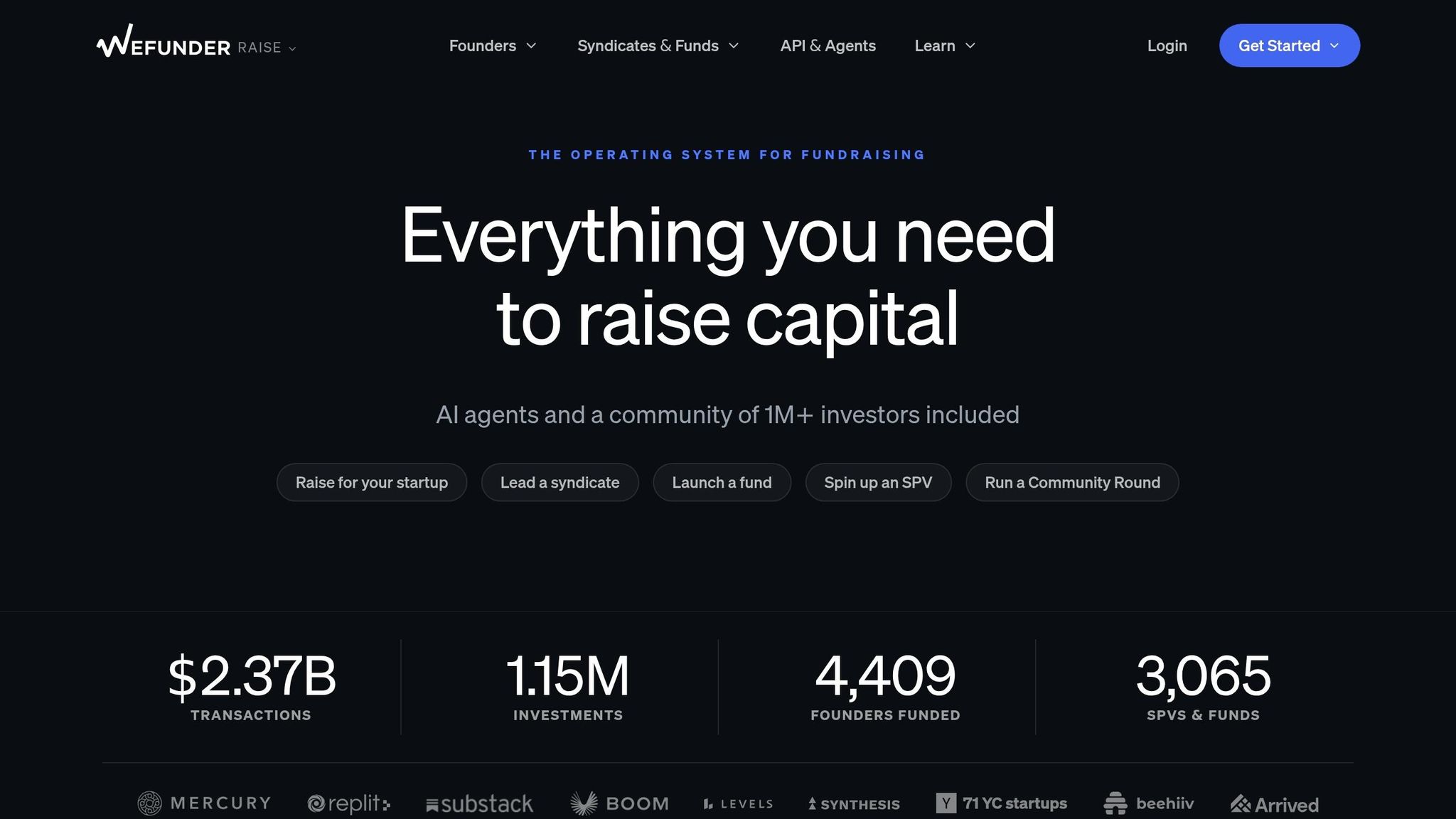
Wefunder takes a community-first approach, earning it the nickname "People’s Platform." With a 75% campaign success rate, the highest among equity crowdfunding platforms, Wefunder has processed over $5 billion in transactions. Its "Community Round" model allows startups to raise funds from customers and fans with minimum investments as low as $100. To keep cap tables manageable, the platform uses SPVs (Special Purpose Vehicles) that consolidate thousands of small investors into a single entry.
Knightscope, a company specializing in autonomous security robots, raised over $18 million across multiple rounds on Wefunder, showcasing the platform’s ability to support repeat fundraising efforts for tech startups. Wefunder also leverages AI tools to help founders connect with investors and optimize campaign timing.
"Wefunder’s recommendation engine favors campaigns generating early momentum, requiring founders to secure commitments before launch." – Angel Investors Network
Kickstarter
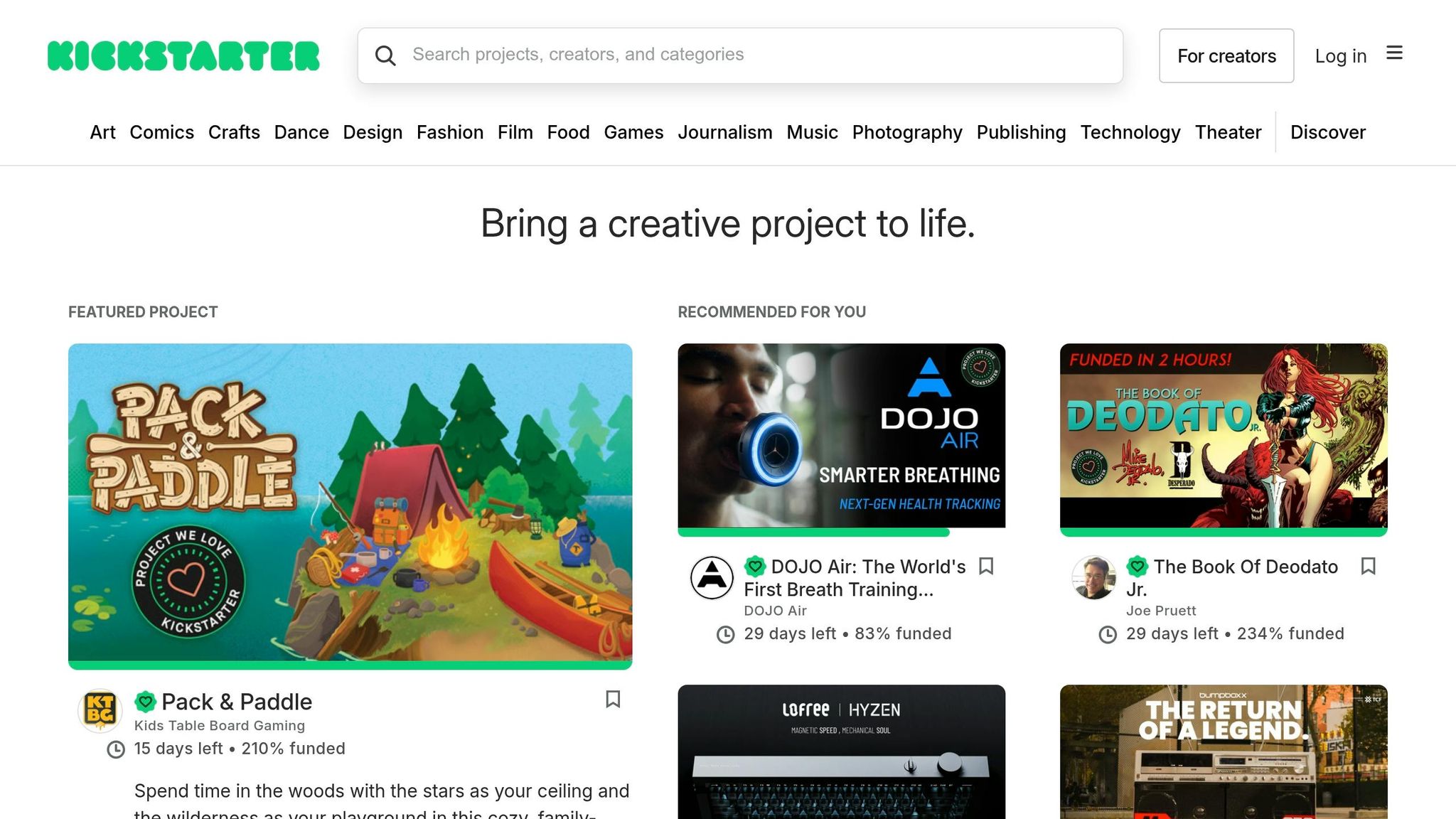
For reward-based crowdfunding, Kickstarter remains a top choice, especially for tech hardware. Its all-or-nothing model ensures that backers are charged only if a campaign reaches its goal. While this builds trust, it also raises the stakes for founders. Kickstarter charges a 5% fee on successful campaigns, plus a 3% + $0.20 payment processing fee per pledge.
Kickstarter’s overall success rate is 42%, but for the Technology category, it drops to 23.9%. This highlights the importance of having a tangible product and an engaged audience ready to pledge on launch day.
Indiegogo

Indiegogo offers a more flexible approach, allowing founders to keep all funds raised, even if the goal isn’t met. Fees include a 5% platform charge and a per-transaction fee. This makes it a lower-risk option for startups still gauging interest in their product.
One of Indiegogo’s key features is InDemand, which allows campaigns to continue selling after their initial run, effectively turning a one-time campaign into an ongoing sales channel. For startups launching globally, Indiegogo’s international reach is a strong advantage.
Republic
Republic is known for its selectivity, focusing on tech, AI, and blockchain startups. This curated approach provides startups with credibility and access to a global network of over 3 million investors across 180 countries. The platform has facilitated more than $3 billion in investments across 2,500 ventures.
Republic charges 6% cash + 2% equity, along with a 2% securities commission. Like Wefunder, it uses a single-line nominee structure to simplify cap table management. Republic also stands out for its expertise in tokenized assets, making it a go-to for Web3 startups. For instance, Avalanche raised $42 million pre-launch through Republic’s crypto division.
"From start to finish, [Republic] treated our company as if it were their own and took away the burden that comes with raising large sums of money from a large number of investors." – Nikolay Storonsky, CEO, Revolut
SeedInvest
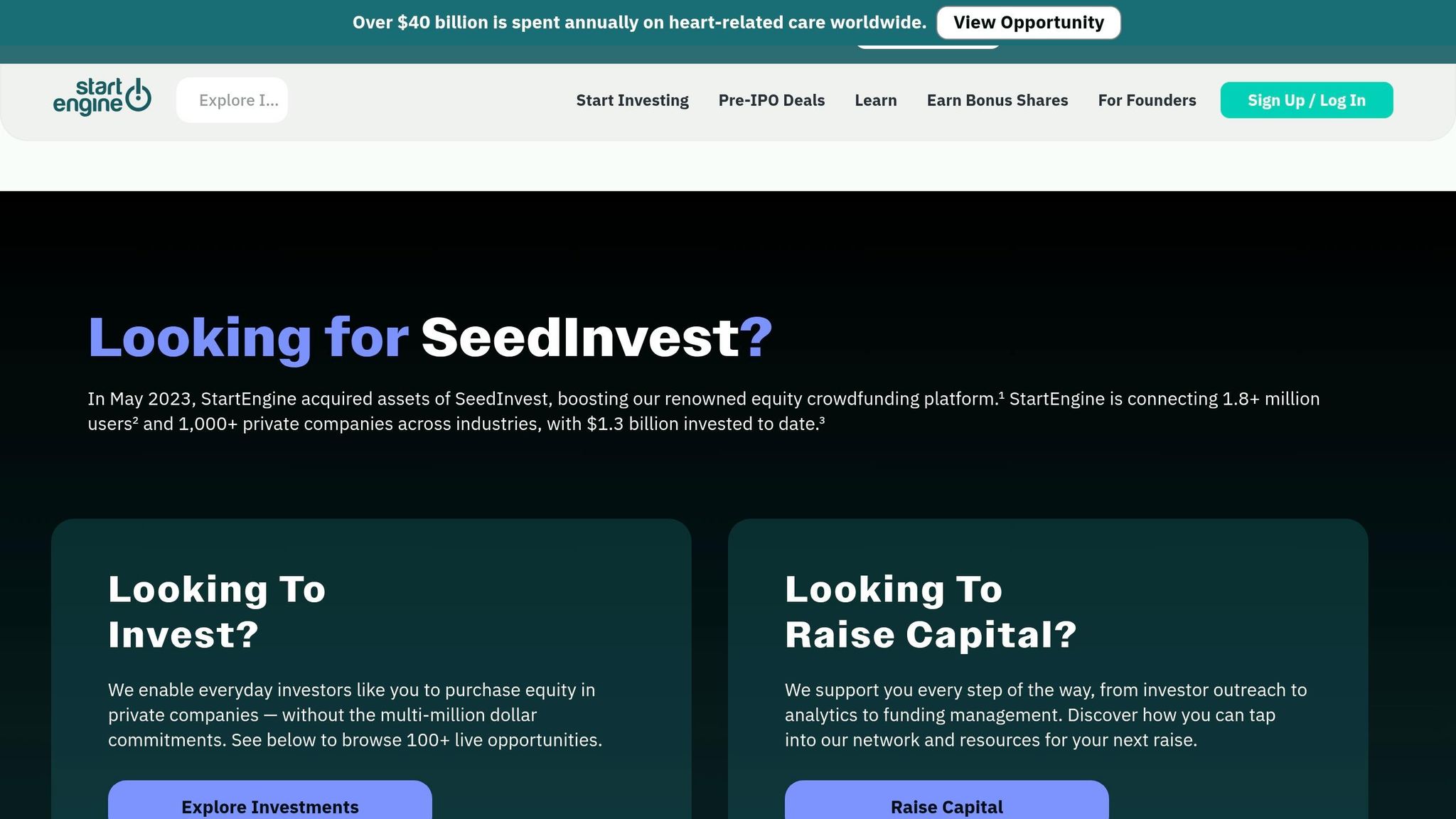
SeedInvest is known for its rigorous vetting process, accepting only a small fraction of applicants. It has built a reputation for working with high-growth tech startups. Recently, SeedInvest joined the StartEngine ecosystem, combining its due diligence expertise with StartEngine’s broad investor network.
This integration gives founders access to a full range of regulatory options (Reg CF, Reg A+, Reg D) while still benefiting from SeedInvest’s strong investor relationships – an ideal setup for B2B tech startups targeting accredited investors.
Crowdfunder
Crowdfunder focuses on connecting startups directly with accredited investors, making it less of a mass-market platform and more of a deal-flow network. The platform hosts live pitch events, giving founders the opportunity to present directly to investors. This format works well for startups with compelling stories to tell in person. Many of these startup tech stories are featured in deep-dive interviews with founders who have navigated these exact funding paths.
For tech startups, Crowdfunder stands out for its investor-matching tools and the quality of its investor base. It’s a better fit for those seeking strategic capital and mentorship rather than a large community of small-scale backers.
Platform Feature Comparison
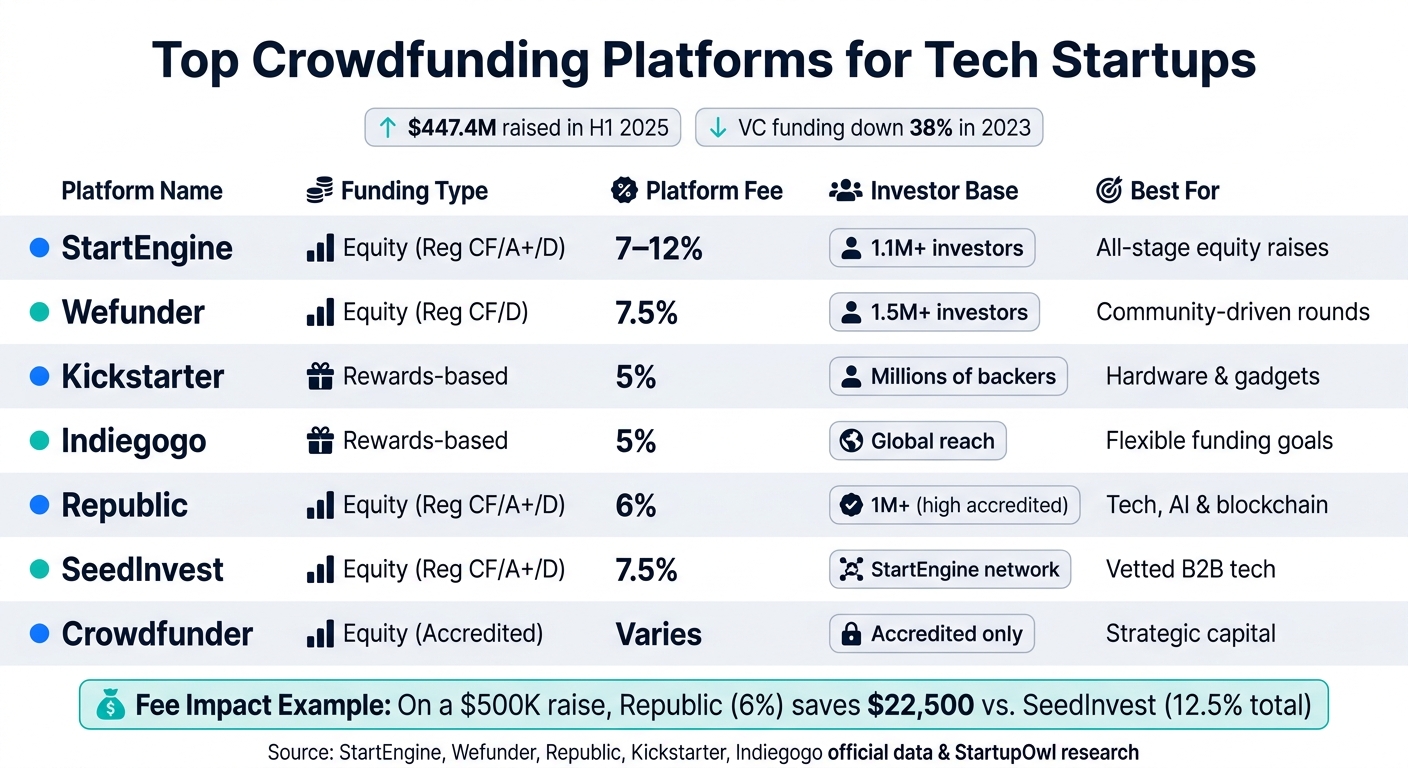
Top Crowdfunding Platforms for Tech Startups: Side-by-Side Comparison
Navigating seven different platforms can feel overwhelming, especially with varying fees, funding models, and investor reach. To simplify, the table below breaks down what each platform offers side by side.
| Platform | Funding Type | Platform Fee (Cash) | Equity/Other Fees | Tech Success Rate | Investor Base |
|---|---|---|---|---|---|
| StartEngine | Equity (Reg CF/A+/D) | 7–12% | 2% equity + $10K deferred | Not publicly disclosed | 1.1M+ |
| Wefunder | Equity (Reg CF/D) | 7.5% + 2% processing | None | ~75% (all campaigns) | 1.5M+ |
| Kickstarter | Rewards-based | 5% + ~3% processing | None | Not publicly disclosed | Millions |
| Indiegogo | Rewards-based | 5% + ~3% processing | None | Not publicly disclosed | Global |
| Republic | Equity (Reg CF/A+/D) | 6% | 2% Crowd SAFE equity | Not publicly disclosed | 1M+ (High Accredited) |
| SeedInvest | Equity (Reg CF/A+/D) | 7.5% | 5% equity | Not publicly disclosed | Part of StartEngine network |
| Crowdfunder | Equity (Accredited) | Not publicly disclosed | Not publicly disclosed | Not publicly disclosed | Accredited investors only |
This table provides a clear snapshot of the fees and investor reach for each platform, helping you weigh your options based on your campaign’s specific needs.
For example, if you’re raising $500,000, SeedInvest’s total fees (cash + equity) come to 12.5%, while Republic only charges 8% – a difference of $22,500. That makes Republic a more cost-effective option for larger raises. However, keep in mind that equity-based campaigns come with extra expenses. Filing SEC Form C is mandatory, and if your raise exceeds $1,235,000, you’ll need audited financials, which can cost between $5,000 and $15,000.
As Richard Moore, Senior Finance & Banking Editor at StartupOwl, points out:
"Choosing a platform before comparing fee structures (the difference between 7.5% and 12% on a $500K raise is $22,500)." – Richard Moore, Senior Finance & Banking Editor, StartupOwl
Ultimately, matching your startup’s size and funding goals with the right platform is critical for managing costs and maximizing your campaign’s success. Many startup tech leaders have shared their own fundraising journeys and product stories on the Code Story podcast.
How to Pick the Right Platform for Your Tech Startup
The type of product your startup offers plays a huge role in choosing the best crowdfunding platform. For hardware startups – think gadgets, IoT devices, or wearables – rewards-based platforms like Kickstarter or Indiegogo are often the go-to options. For example, Kickstarter has supported over 30,000 hardware campaigns, collectively raising around $1.5 billion. On the other hand, software or deep tech startups, which typically lack a physical product to pre-sell, are better suited for equity crowdfunding platforms like Republic or Wefunder. These platforms attract investors looking to back long-term growth rather than immediate product delivery.
Your funding model should align with your campaign goals. Kickstarter uses an all-or-nothing approach, which can build trust by only charging backers if the funding goal is met. Indiegogo, however, offers a flexible model, allowing you to keep all funds raised regardless of whether you hit your target. The choice depends on how confident you are in reaching your goal. Also, keep regulatory and legal costs in mind as you finalize your strategy.
Speaking of compliance, equity crowdfunding comes with significant upfront costs. Budget between $15,000 and $40,000 for legal and accounting work before filing SEC Form C. If you’re raising more than $618,000, you’ll need audited financials, and for larger campaigns under Reg A+ (allowing raises up to $75 million), ongoing compliance costs can range from $50,000 to $150,000 annually. To navigate these complexities, consult a legal advisor or listen to insights from startup tech leaders at least 3–6 months before launching your campaign.
Pre-launch preparation is crucial for success. Building an email list of at least 500 signups during the 8–12 weeks before launch can generate about 30% of your initial pledges. This early momentum not only boosts your campaign’s credibility with the platform’s algorithm but also reassures potential backers. A great example is the Oculus Rift campaign. Back in 2014, the VR hardware startup raised $2.4 million in just 30 days on Kickstarter, a milestone that helped lead to its $2 billion acquisition by Facebook.
Lastly, don’t forget to account for the total cost of raising funds. Platform fees, payment processing (usually around 3%), and compliance costs can eat up 10%–12% of your total raise. Be sure to calculate these expenses when setting your funding target to avoid surprises.
Conclusion
Selecting the right crowdfunding platform can profoundly influence your startup’s financial trajectory. The choice between a rewards-based platform like Kickstarter and an equity-focused one like Republic or Wefunder isn’t just about fees. It impacts who gains ownership in your company, the regulatory responsibilities you’ll handle, and the long-term relationships you’ll build with your backers.
In the first half of 2025, crowdfunding generated $447.4 million, marking a 60% year-over-year increase. This surge contrasts sharply with the 38% decline in global venture funding, which fell to $285 billion in 2023. This shift is pushing tech founders to prioritize crowdfunding as a key funding approach.
The broader implications are emphasized by industry leaders. Hyperspace Ventures explains:
"Equity crowdfunding isn’t just about money, it’s about building a tribe of owners who promote, advise, and stick with you through growth."
This is especially relevant for software and deep tech startups, where community engagement often holds as much value as the funds raised.
Additionally, your platform choice can influence more than just funding – it can affect governance. Tools like SPVs (Special Purpose Vehicles) simplify managing investors and help maintain a clean cap table, which is essential for future funding rounds.
FAQs
Should my tech startup use equity or rewards crowdfunding?
The decision to go with equity or rewards crowdfunding largely depends on your funding needs and how open you are to sharing ownership of your business. Equity crowdfunding allows you to secure substantial funding – ranging from $250,000 to $5 million – by offering investors a stake in your company. On the other hand, rewards crowdfunding is perfect for pre-selling products, building excitement, and testing your concept, all without giving up any ownership. Opt for equity if you’re targeting bigger investments, or go with rewards if your focus is on creating a community and validating your product.
What hidden costs should I budget for beyond platform fees?
When budgeting for your crowdfunding campaign, don’t overlook marketing expenses, fulfillment costs, and the time investment involved. These often-overlooked costs can add up quickly and have a big impact on your overall budget. Planning for them in advance helps you avoid unexpected financial surprises down the line.
How big should my pre-launch email list be to hit my goal?
To hit your funding target, aim for a pre-launch email list of 700 to 1,200 signups. The ideal size can vary based on your campaign details and the conversion rates you anticipate. What matters most is cultivating an engaged audience – this will significantly boost your chances of achieving your goal.