S5 Bonus: Stop Building Features Nobody Wants: Mastering Jobs-to-be-Done with Jay Haynes of THRV
In this episode
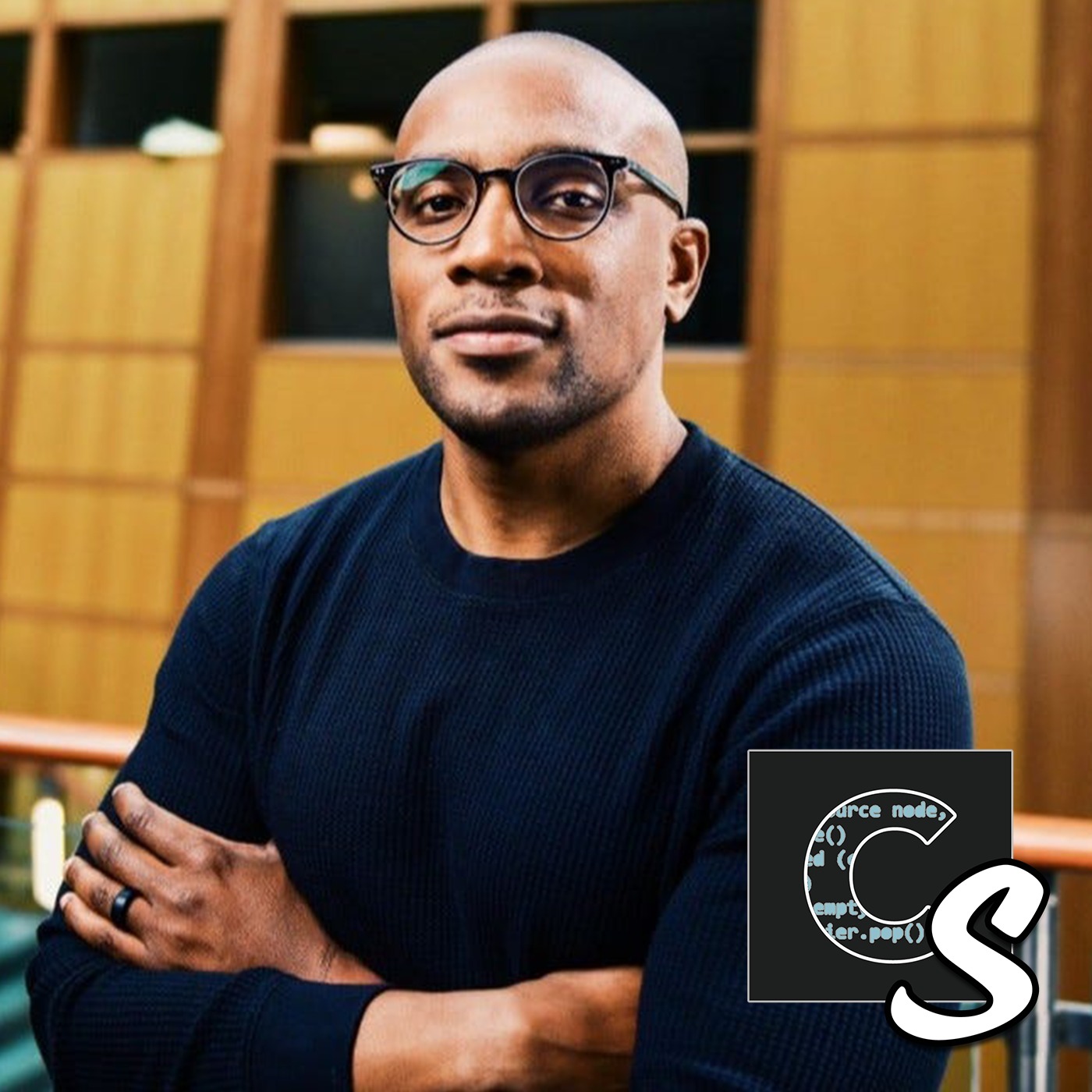
Jay Haynes has always been interested in tech, just like his Dad. In 1979, his Dad bought and brought home an apple II plus. Though he was using it for his business to do spreadsheets, Jay began writing code so he could play video games for free, slinging code in BASIC. It's worth noting that this was back when you had to pay a quarter to play a video game.
His Dad was a navy pilot, and a hobbyist sail plane flyer, which Jay flew as well, even up to 30,000 feet in the air! As he says, he got grounded as soon as he got married and had 4 kids.
Early in his career, Jay got into finance and quickly became familiar with using debt to get equity returns. However, he was always interested in the core innovation problem - of why customers buy new products, and why they switch. Throughout his career, time at Microsoft, schooling, startup life, etc. - he found out that no one really had a secret sauce to innovation. He started evaluating new ways to do it, and came across the Jobs to Be Done theory, which became the foundation to what he has built today.
This is the creation story of THRV.
Sponsors
- Courier
- Img.ly
- Routable
- CTO.ai
- Cloudways offers peace of mind and flexibility so you can focus on growing your business instead of dealing with server management. With Cloudways, you get an optimized stack, managed servers, backups, staging environment, integrated Git, pre-configured, Composer, 24/7 support, and a choice of five cloud providers: AWS, DigitalOcean, Linode, Google Cloud, and Vultr. Get up to 2 Month Free Hosting by using code "CODE30" and get $30 free hosting credit.
Links
- Website: https://www.thrv.com/
- LinkedIn: https://www.linkedin.com/in/jayhaynes/
- https://jobs-to-be-done.com/
Times are from the episode recording; ad breaks in your player may shift them a bit later.
Read the key answers from this episode, with quotes and timestamps from Jay Haynes from THRV: https://www.codestory.co/episodes/s5-bonus-stop-building-features-nobody-wants-mastering-jobs-to-be-done-with-jay-haynes-of-thrv/
Current Sponsors:
Checkout our Stacklist! https://stacks.codestory.co/
Check out our Patreon!
Hosted by Noah Labhart | Technical Founder & Startup Mentor.
Our Sponsors:
* Check out Granola and use my code granola.ai/CODESTORY for a great deal: https://granola.ai
Advertising Inquiries: https://redcircle.com/brands
Privacy & Opt-Out: https://redcircle.com/privacy
Intro
Jay Haynes: In traditional kind of startup land, MVP is the minimum viable product. And actually, in our view, viable is the wrong word exactly because of the question you just asked, which is, what are you going to build that people are going to pay for? That is the fundamental business question. And so the way that we think about it is the minimum valuable product. You want to make sure you're creating enough customer value. It doesn't matter that your product is viable, but is it valuable? Is anybody going to value it in the market?
Jay Haynes: I'm Jay Haynes, the founder and CEO of Thrive, THRV.com.
Noah Labhart: This is Code Story, a podcast bringing you interviews with tech visionaries who share in the critical moments of what it takes to change an industry a team that has your back. I'm your host, Noah Labhart, and today, how Jay Haynes created the product management tool so you can build products your customers love.
Noah Labhart: All this and more on Code Story.
Noah Labhart: Jay Haynes has always been interested in tech, just like his dad. In 1979, his dad bought and and brought home an Apple II Plus. Though he was using it for his business to do spreadsheets, Jay began writing code so he could play video games for free, writing his games in BASIC. It's worth noting that this was back when you had to pay a quarter to play a video game. His dad was a Navy pilot and a hobbyist's sailplane flyer, which Jay flew as well, even up to 30,000 feet in the air. As he says, he got grounded as soon as he got married and had four kids.
Noah Labhart: Early in his career, Jay got into finance and quickly became familiar with using debt to get equity returns. However, he was always interested in the core innovation problem of why customers buy new products and why they switch. Throughout his career, his time at Microsoft, his schooling, startup life, etc., he found out that no one really had the secret sauce to innovation. He started evaluating new ways to do it and came across the jobs-to-be-done theory, which became the foundation to what he's built today.
Noah Labhart: This is the creation story of THRV.
Noah Labhart: At
Jay Haynes: THRV, we build enterprise product management software for product teams. Our software is built from the ground up around a methodology known as jobs to be done. And jobs to be done in its very simplest form is the idea that your customers are actually not buying your product. What they're doing is hiring it to get a job done. If you're on a product team and you want to create a product strategy and a product roadmap that is going to be successful, meaning it's going to generate more customers and it's going to get customers to switch from your competitors to your product, To build that kind of product strategy, you should think about your markets in terms of the job that your customer is hiring your product to do rather than just your product and your features.
Jay Haynes: We mentioned music before because I've owned 8-tracks, cassettes, CDs. What's interesting about that market is it's a great example of jobs to be done. So the job there is to create a mood with music. That's what we're doing. Whether you're using a record, a CD, or a streaming service, or a string quartet, you're trying to create a mood with music. And that job is the same. It's never going to change. So the power of the method behind our software is it gives teams a stable target to aim at and try and hit.
Jay Haynes: And a great example of this is the Microsoft Zune. You may remember the Zune or maybe not because it was a huge failure. At the time, it seemed smart for Microsoft to invest in the Zune because Apple was selling iPods at an incredible clip. they sold 30 billion dollars worth of iPods. So Microsoft said well we'll make a competitor to the iPod and we are Microsoft we have a billion customers we have an operating system we can connect it to we have distribution you know smart technology people we have resources and assets we can throw at this so let's spend a billion dollars and we'll get a share of that supposed iPod market.
Jay Haynes: And of course it was a huge failure they lost 300 million dollars in one quarter alone so they on the Zune. And this is the problem companies confront is should we make an investment to compete in a market? And in that case, they define the market as the iPod market. It seems like a traditional definition of the market would work. There's, you know, 200 million iPods sold at $150 a piece, and that's a $30 billion market. And yet now it's absolutely zero. No one buys any iPods anymore because we all use streaming services.
Jay Haynes: And this happens again and again and again and again. So what our software does is helps teams avoid those mistakes. So it's really trying to assess where our customers are underserved, where their unmet needs in the market today, that something new in different would be able to satisfy and get customers to switch. And people forget at the time that the Zune launched, a new service called Pandora launched, and they were signing up 90,000 people a day. And what that meant was there were clearly unmet needs in the market that Pandora was satisfying.
Jay Haynes: Microsoft just didn't know what those needs were. And had they known what those needs were, they would have had better insights and avoided the Zune mistake and potentially been able to launch a streaming service that would be competing. So what we do, what our software does, is really try and get teams to be super customer focused and empathize with their customer struggles. Back in the first decade of my career in the 1990s, I was in the financial industry. We're buying companies. Steinway and Sons.
Jay Haynes: And I always love that because Steinway, you know, it's an amazing company with an incredible brand. It's literally the least innovative company on the planet. It's selling the exact same product. They build pianos and they pride themselves on, they're making the pianos the same way they made them 150 years ago. So nothing's changed. So that got me thinking, well, why not? Why isn't Steinway innovating in music? Music's a huge market. You know, There's lots of things they could do, and they just didn't want to take the risks.
Jay Haynes: Then I went back to business school, and I studied with Clay Christensen. When I studied with him in the late 90s, he was focused on disruption. It basically described a phenomenon. It didn't tell you what to do about it if you were a product team or a product executive. Then I went to Microsoft and worked as a product manager in the Windows Group. And at the time, in the late 90s, of course, Microsoft was just the dominant company in the world. And I went into the Windows group thinking, oh, well, they must have this incredible innovation process.
Jay Haynes: And, you know, they were using stuff that was considered state of the art in the late 90s, where you would put together a bunch of feature ideas and then ask, you know, customers which feature ideas you liked. And that didn't work very well either, not surprisingly. And then I ran a couple Silicon Valley-backed startups by Sand Hill Road kind of investors and thinking that they, who invested in some of the world's leading companies, would have some secret sauce that I would learn. Of course, they didn't either.
Jay Haynes: And that's when I really started thinking in the early 2000s about just the innovation process in general and started to really evaluate better ways to do it. And then I went and ran a firm that was doing a lot of research. And Jobs to be Done produces a lot of research. It's a lot of data and information about customers, about their unmet needs, about segments and market sizing and competitors and messaging positioning. You know, it's the kind of complete set of data about the markets. And to be able to use that data effectively can be difficult if your solution is PowerPoint and spreadsheets.
Jay Haynes: because we haven't met a product team yet that wants more PowerPoint presentations and more spreadsheets. So that really became the foundation for building THRV, which was we have a lot of data and a lot of great insights about markets, customers, segments, competitors, etc. But we have to make it usable for teams. Teams have to be able to act on it and agree on the data. And that's really was the start of it is can we help product teams innovate better with less risk using really good data.
Building the THRV MVP
Noah Labhart: Tell me about the MVP. Tell me about that first product you built, how long it took to build and what sort of tools you use to bring it to life.
Jay Haynes: There's a few different ways to think about our product. Not surprisingly, we're using jobs to be done to build THRV on THRV. So the way that we really think about it is what we're helping teams do is identify a winning product strategy to satisfy unmet customer needs better than competitors. That's actually what we think of helping teams do. So our solution really has three components. So again, we don't think about it just as the software, because if that's the job we're trying to help teams get done, then there can be other things besides software.
Jay Haynes: And that includes training. also provide a lot of training services and research services. If they need help doing the research or if they're doing it on their own, we can help with that. So we really started providing services, training and research services to help teams understand the jobs to be done method. And then we started building software because what they needed was a way to come to an agreement on the data and then to actually build a product strategy and a product roadmap. And that's, you know, an incredibly difficult thing for product management teams to do.
Jay Haynes: So we started building a platform. Luckily enough, we were already in SaaS land, you know, when we started the company eight years ago. That really decided for us, we were going to make this a SaaS application. You know, we weren't going to build an on-premise application. So we're built on all of the modern architecture that run most SaaS applications.
Early Decisions and Tradeoffs
Noah Labhart: So, you know, with any MVP, you've got to make certain decisions and trade-offs about, cut or technical debt or how you're going to build it to get it out there quickly and prove that the market you know wants to use it wants to pay for it essentially so tell me about some of those early decisions and trade-offs you had to make and how you coped with them
Jay Haynes: in in traditional kind of startup land mvp is the minimum viable product and actually in our view viable is the wrong word exactly because of the question you just asked which is what are you going to build that people are going to pay for? That is the fundamental business question. Because if you don't have something that people won't pay for, or use if you have an advertising model, but but they have to see value in it. And so the way that we think about it is the minimum valuable product, rather than viable.
Jay Haynes: And the reason that seems like it may just seem like a subtle difference, but it's actually kind of profound, is you want to make sure you're creating enough customer value, it that your product is viable. I mean, today, you can fire up, you know, AWS servers with a lot of code and start writing something that's viable, meaning it works. But is it valuable? Is anybody going to value it in the market? Are they going to switch? Or did you just build the Microsoft Zune? Right? The Zune is a great example.
Jay Haynes: It really worked. The Zune was nice, had a nice interface, even had a podcasting feature, ironically, you know, but it wasn't valuable, because it didn't do anything different. It didn't satisfy any unmet needs in the customer's job. So when we think about what we're doing, the first minimum valuable product that we actually built was a way to see the insights into customers and markets and competitors. So we thought about that up front. We just have to build into our software and even our services, experiences get really valuable insights using the jobs to be done method.
Jay Haynes: And then from there, we've used jobs to be done, not surprisingly, to figure out what our product roadmap looks like. In all cases, what I will say, what's interesting about product roadmapping and product strategy is what teams really need to focus on is over the long term, they need to help customers get get the entire job done. And that's where the really big growth success stories come. Start small because jobs are very, very complex. Even the job of creating mood with music, you know, it has 15 different steps and about a hundred different customer needs.
Jay Haynes: And then over time, you want to prioritize which ones to focus on, but you want to continually get the whole job done because you don't, as a customer, want to use different solutions to get the job done. And the music example is a great one. You don't want to have to go to a separate store and then buy your records, right? And then buy cassettes and then use a record device and a cassette recorder to then create a playlist. So that's why we all moved to iPods because we could just have an online store and then put them onto our device and create our own playlists.
Jay Haynes: And then we all switched to streaming services because no one even wanted to go to a store anymore. Why do I have to go to a separate store and then create a playlist? Why can't the solution do that for me? And that's, of course, what Pandora and Spotify do exceptionally well.
Noah Labhart: So you mentioned building roadmap and using Jobs to be Done to build your roadmap.
Prioritizing the THRV Roadmap
Noah Labhart: So tell me a little bit about that. So you got the product, you got your MVP, you've made your trade-offs, right? But then you're going to start building your roadmap and deciding how to prioritize things. So tell me about that and tell me how you decided this is the next most important thing to build. And I suspect it's going to be through the Jobs to be Done method.
Jay Haynes: Yeah, that's right. And it really is nice that we're using the Jobs to be Done method, you know, to build our roadmap. And we're also working with the companies that we work with to build, help them build their roadmaps. So there's a few different ways to do it. In short, you want to get quantitative data about where your market is underserved. And this is what we do too, which is we look at product teams, and you can sample the market once you've done that. you know what the job is, you can ask about customer effort.
Jay Haynes: And there's been great research around customer effort scores and why they're more predictive of success than either customer satisfaction or net promoter scores. And just very briefly, the reason it works is because when people struggle to get a job done, that's when they're willing to pay for something new and to switch. So when we build our roadmap, we use those quantitative customer effort scores what our product strategy is and what we're going to focus on for 2021 and 2022. And that's extremely powerful way to build a roadmap because as you know, and I'm sure your listeners know too, product roadmapping meetings can be really stressful because people are trying to make these big decisions.
Jay Haynes: There's lots of debate. There's lots of opinions and product teams are very smart, you know, tend to be very smart people who work on product teams. So there's There's a lot of disagreement and it can get very, very heated. And the power of building a roadmap from your customer's perspective is it takes that opinion out. It's not Jay's opinion or Noah's opinion. It's what the customers are prioritizing. So when you know where they're struggling the most, it doesn't matter if I don't want to focus there.
Jay Haynes: That's where the customers want us to focus. So we really follow our customer's struggle. And jobs to be done really is a way of empathizing with your customer struggle. It's a way of getting into their mindset and figuring out what problems they're having so that you prioritize your product roadmap based on what they are struggling with, not what you want to do as a company. We actually, when we work with companies, we say this to them all the time. We ask, you know, how do you prioritize your roadmap?
Jay Haynes: And they're usually some version of, well, our executives tell us what to do. And we call that the HIPPO, the highest paid person's opinion. But what we say is you shouldn't prioritize your product roadmap. Your customers should. They'll tell you where they're struggling the most, and that's where you should prioritize your roadmap.
Noah Labhart: So let's switch to team.
Building the Team
Noah Labhart: So how did you go about building your team? And I'm interested in what you looked for in those people to indicate that they were the winning horses to join you.
Jay Haynes: Our development team is just super smart developers build SaaS applications. But our team, our product team that really focuses on what we're doing with jobs to be done, it is an interesting skill. Some people really, really like it and some don't. And over the years, we've been able to develop essentially a set of criteria for the type of people that are going to be really good on our team. And I think that's important for anybody who's building a team is really trying to be explicit about that because you want people to join the team to be successful.
Jay Haynes: And if they're not going to be successful, it's not really good for the company. It's not really good for the person. You know, you really want someone who's going to be successful in the job. For us, there are a few different criteria. Jobs to be done is a process. It is. It's got a beginning, a middle and an end. Even a customer job is really a process they're going through to achieve a goal. If they're really process-oriented and they're really metric-oriented, because a job is essentially a set of customer needs that are metrics that can be measured.
Jay Haynes: And if you are a person who has that kind of process orientation and that metric orientation, then you'll probably work really well on our team. And that's proven to be true. And it's very exciting. We like working with people where we can help them build their careers and become experts as well. And if they're process oriented and have this metric driven focus, they're usually going to succeed with jobs we've done. So that's been our kind of main criteria.
Scaling THRV
Noah Labhart: So let's flip to scalability then. So did you build this to scale efficiently from day one or were you fighting this as you grew? Since there are
Jay Haynes: three parts of our business, there's the software, which is the core business. There's the training people on the methods so that they know how to use the software. And then there's actual services when companies want help with us providing them kind of research and insights and strategy. Obviously, the most scalable part of the business is the software. And the course is also scalable. We've built the course into the software, which is really nice. One analogy metaphor we use all the time is it's kind of like we invented the electric guitar and no one knows how to play music and no one knows any music theory.
Jay Haynes: So in order to get this guitar out into the hands of people, we need to teach them music theory and then teach them how to play songs. So there's a part of the business that isn't as scalable, and that's the service side of the business. the software, we're building it so that someone could come in with no knowledge of jobs to be done and no experience with the method and still be really successful with it. That is our goal. And we're always working towards that goal and always improving it. So we did build the company from the beginning to be able to scale.
Jay Haynes: And we're excited about that. There's a lot of things we've got going on that are helping, not just because we want to scale, which we do, but also because because we want our customers to be very successful at this. You know, this is not like other applications, like a spreadsheet where, you know, a spreadsheet gives you the opportunity to put in any data you want and come up with any conclusions and do any analysis you want. We're trying to get people to the right answer as fast as possible so they can really succeed as product teams.
Jay Haynes: And so that takes a little bit more time. But yeah, we've built the application to be able to scale from the ground up.
Proudest Moment
Noah Labhart: Well, as you step out on the balcony across all of these built with THRV, what are you most proud of?
Jay Haynes: The first thing that comes to mind, so it makes it easy to answer the question is the success we've seen for the companies that use jobs to be done. That is really, really exciting. Because ultimately, you know, we want to be successful, but we're only going to be successful, if the companies that we work with really can build product strategies and product roadmaps that win in the market and we've got great case studies of this with a company company called auto quotes we helped really accelerate their growth we helped a group within target that was targeting the registry market reclaim leadership from amazon and that's no small feat so you know why we really like our software of course everybody likes the things that they build because they're you know our own toys but we really really like when teams are successful with the method and our software.
Jay Haynes: That I think is the thing we're most proud of is, at the end of the day, we're trying to help people succeed because being innovative and successful with products is really, really, really hard. I mean, we all you know, look at the success stories, whether it's Apple, Google, Twitter, you know, whoever. And we say, Oh, those are great. You know, those are great success stories. But we forget that there is just literally a huge graveyard of failures. Most new product innovation efforts fail dramatically and almost none become the successes that we know about.
Jay Haynes: We really like to help those teams succeed and win. And I think that's what we're most proud of.
A Mistake and Response
Noah Labhart: Let's flip the script a little bit. Tell me about a mistake you made and how you and your team responded to it.
Jay Haynes: Like all entrepreneurs and companies, where do I I start? So I think probably one of the mistakes that we made that we've been working on fixing is the separation between the course and the app. And what we realized is people using a new tool, you know, essentially new software and a new method, those two things really should go go together. You should be learning the method while using the tool. And so that's what we're really working towards is that you don't need to go, you know, take all the course and then start using the software.
Jay Haynes: You can do both together and you're kind of continually doing it. You're always learning and always improving. And that's why I like the music example. You can start writing songs even with a very little bit of music theory. You don't need to be, you know, a PhD in music can still write great songs. And that's what we're trying to do a better job of is you don't have to know all the theory and every detailed element of it to write a great song in order words to create a great product strategy and a great product roadmap.
Jay Haynes: So I think that if we look back on our product roadmap and what we would have changed, we would have had that closer integration with the course and the app earlier on.
The Future of THRV
Noah Labhart: Well, this is always a fun question to ask. So does the future look like for THRV, the product and for your team?
Jay Haynes: The way that we think about everything is speed and accuracy. And the companies we work with as well, we always help them think about this for their customers, which is, how are you helping to do something faster and more accurate? And that's really, if you go back and look at the kind of history of innovation, every innovation really helps you achieve your goal. A job to be done is a goal. help you achieve that goal faster, more accurately. And that's the way that we think about THRV is we're trying to help teams faster by getting them through the process of learning the innovation method, and getting data and insights as fast as possible, and helping them make sure it's more accurate, so that they're on the right path, they have the right product strategy.
Jay Haynes: So when we look at our roadmap for 2021 and 2022, we're always focused on speed and accuracy. For us, you know, what can we do for product teams that's going to make using Jobs to be done faster and more accurate?
Jay's Influences
Noah Labhart: Let's switch to you, Jay. Who influences the way that you work? Name a CEO, a CTO, an architect, really any person. Who do you look up to and why?
Jay Haynes: Since I'm in the Jobs to be done world, I think it would be a mistake not to mention of jobs to be done, you know, the big thinkers, Clay Christensen and Theodore Leavitt. They really helped start this type of thinking. Clay Christensen, who was the Harvard Business School professor, who I mentioned before, he passed away recently, unfortunately. But I would recommend to anybody interested in this stuff to read his books, especially Competing Against Luck, which is a great book all about jobs theory and why it's important and why it's valuable.
Jay Haynes: But this type of thinking even goes farther back. It's just in today's innovation language, it's called jobs to be done. But Theodore Levitt was another business professor. And he was the one you may have heard the phrase that's used a lot. But he was the one who famously said customers don't want a quarter inch drill, they want a quarter inch hole. And his work still influences me today. Because if you go back and look at and marketing myopia is his famous paper that was written in the 1960s. And he was analyzing the entertainment industry, the energy industry, and transportation.
Jay Haynes: He was fascinated by why the movie studios missed the opportunity for TV. Why did the oil companies miss the opportunity for natural gas and solar? And why did the railroads miss the opportunity for cars and planes? The answer was all of those those industries are focused on their product, they define themselves as the oil industry, or the train industry or the movie industry. Your customers don't care about your product. That's the core of jobs you don't they care about their job they need to get done.
Jay Haynes: And in those cases, of course, oil is used for energy. Entertainment is the job, whether it's movies or TV. And, of course, in transportation, you're trying to get to a destination on time, you don't care if it's a plane or a car or a bicycle or whatever. Industries will follow customers. So of course, now we have entertainment conglomerates. We have energy companies that are diversifying. You know, transportation is still a little quirkier. But that type of thinking, I mean, Theodore Levitt really pioneered this back in the 1960s.
Noah Labhart: Well, we talked about a mistake,
What He'd Do Differently
Noah Labhart: but a little bit different spin. If you could go back to the beginning, what would you do differently? Or where would you consider taking a different approach?
Jay Haynes: It's always good to look back and think about what you would do differently without kind of dwelling on it. And I think the key things would probably be we would have changed some of the architecture. We're now on the third major revision of our architecture. And it's really nice. It's, of course, evolved. And a couple of years ago, we did a real rewrite of all of the software. And that's really exciting. I mean, technologies change, things advance, et cetera. So you do need to change. But I think we probably would have spent a little bit more time on the architecture in the early days.
Jay Haynes: days. Now, having said that we are we are it feels great. But if you're an entrepreneur out there, and you're thinking about this kind of stuff, I think getting that architecture right in the early days is is critical. And frankly, I think in 2021, it's easier to do, you know, they're just a lot more advanced technologies. But that's something I think we would have done a little bit differently.
Advice for Young Entrepreneurs
Noah Labhart: Last question, Jay. So you're getting on a plane and sitting next to a young entrepreneur who's built the about it. They can't wait to show it off to the world. Can't wait to show it off to you right there on the plane. What advice do you give that person? Having gone down this road a bit? I
Jay Haynes: would put it very simply, be able to explain the customer value of your product. And I see this as the biggest mistake that entrepreneurs make all the time because they build a widget, whether it's, you know, software or hardware or whatever, and we love the widget. So the thing that we want to do is talk about the widget. Look at my cool new widget, look at my new toy. This is really great. And that's, that's okay, because we were humans are naturally builders, and we like building things and we like showing off what we built.
Jay Haynes: But my advice would be really explain and empathize with your customer. And why explain the why of your widget? Why is this valuable to your customer? Why are they going to it? Why is it can become important in making their their lives better. And this is, I think, the most important thing for any entrepreneur. Because if you have this type of customer empathy, real customer empathy and their struggles, you'll ultimately be successful. Because life is tough. Life today is hectic. We're all really busy all the time, we're constantly under pressure to perform, your customers have an an enormous amount of anxiety going through their life, their professional lives, their personal lives, you know, whatever it is, and having that kind of empathy.
Jay Haynes: And before you even if you're sitting next to me in a plane, and you wanted to talk about your product, because you're an entrepreneur, you just built this great new, you know, software, hardware, whatever it is, the first thing to do would be to really explain your customer, their struggle, and how you're helping your customer overcome that struggle. And then your product will start flying off the shelves. That I think is the most important advice I could give entrepreneurs is really understand your customer struggle.
Noah Labhart: That's fantastic advice. Well, Jay, thank you for being on the show today. And thank you for telling the creation story of THRV.
Jay Haynes: Thanks, Noah. Thanks for having me.
Noah Labhart: And this concludes another chapter of Code Story.
Noah Labhart: Code Story is hosted and produced by Noah Labhart. Be sure to subscribe on Apple Podcasts, Spotify, or the podcasting app of your choice. Support the show on patreon.com slash Code Story for just five to ten bucks a month. And when you get a chance, leave us a review. Both things help us out tremendously.
Noah Labhart: And thanks again for listening.
Chapters
Featured Guest
Latest Season of the Podcast is Sponsored By






 Apple Podcasts
 Spotify
 Castbox
 Player FM
 Pocket Casts
 YouTube
 Overcast
 Castro
 Goodpods
 Moon FM
 Podbean
 Podcast Addict
 Podcast Republic